
Dicuspiditermes is a genus closely related to Pericapritermes but can be distinguished by the front of the head steeply sloping downward (in the soldier). It is only found in the Oriental region, and confined to forested areas. The genus is unique in that the soldiers look distinctive, having overly large heads in proportion to their body making them clumsy outside their nests, whilst their mandibles are highly elongated and odd-looking, and work by means of flicking off advancing ants in the close confines of their tunnels.
Dicuspiditermes build epigeal nests raised above ground, although the majority of the nest is below ground level. In most species that are known, their nests resemble small pillars poking up above the ground surface, composed of soil and carton material (their saliva and excrement). These can be free standing or close to/leaning against the base of a tree trunk. They are humus feeders.

Above – The nest of Dicuspiditermes nemerosus etho-species B. The nests may vary in Dicuspiditermes nemorosus, of which two etho-species types have been catalogued so far, with no noticeable morphological differences between them save for their nests.

Above – The interior of D. nemerosus nest.

Above – Dicuspiditermes worker
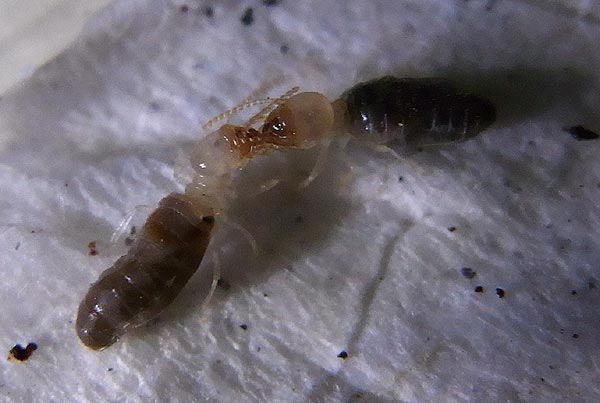
Above – Trophallaxis in termites.

Above – The soldier of D. nemerosus resembles Pericapritermes spp closely and can often be mistaken for them.

Above – The soldiers of D. nemerosus have huge, uniquely shaped mandibles, which are of use mainly inside their nests. Outside, the soldiers seem clumsy and ponderous due to the weight/size of their heads.